
A Small Piece of Land, A Big Opportunity for Lodi’s Parks and Community Life
On Wednesday night, the Lodi City Council will consider a proposal to sell a small portion of parkland at Lawrence Park, (a 30-foot strip of land adjacent to the historic American Legion building), to support the restoration and revitalization of that facility by the Diede Company.
At first glance, this may seem like a narrow land-use decision. In reality, it represents something much bigger: a chance to rethink how we care for, invest in, and activate our parks and recreation assets across the City of Lodi.
The Challenge We Can No Longer Ignore
As has been widely reported, Lodi’s Parks and Recreation Department is facing a substantial deferred maintenance backlog. With dozens of parks and recreation facilities spread across the city, the financial and operational demands of maintaining them all have become increasingly difficult to meet.
This is not unique to Lodi. Cities across California are grappling with the same challenge: how to preserve public spaces while adapting to fiscal realities and evolving community needs.
For several years now, the Lodi District Chamber of Commerce has consistently encouraged city leadership to explore public-private partnerships as one tool to address this challenge. These partnerships can reduce the long-term maintenance burden on the City while unlocking private investment, professional management, and expanded programming opportunities.
A Proven Community Anchor Gets a Second Life
The American Legion Hall is a deeply meaningful place for many of us. It has long served as a community gathering space that hosted celebrations, meetings, and events.
On a personal note, I attended high school dances there, and for more than a decade the Lodi-Tokay Rotary Club that I belong to has hosted Oktoberfest celebrations in that very building. These memories are shared by countless residents who have passed through its doors over the generations.
The restoration currently underway by the Diede Company is, at its core, a community reinvestment initiative. They are making a significant private investment to bring this historic facility back to life (not for exclusive use), but to function once again as a true community center.
The vision is clear: a flexible venue capable of hosting weddings, concerts, plays, celebrations, and civic gatherings, while also serving as a destination that draws visitors from outside the region.
Why the Adjacent Land Matters
The modest 30-foot parcel being considered for sale would allow for the creation of an outdoor patio space directly connected to the building. This small addition unlocks enormous value.
By offering seamless indoor-outdoor functionality, the venue becomes dramatically more flexible, attractive, and competitive. It transforms an underutilized strip of land into an asset that enhances both the facility and the surrounding park environment.
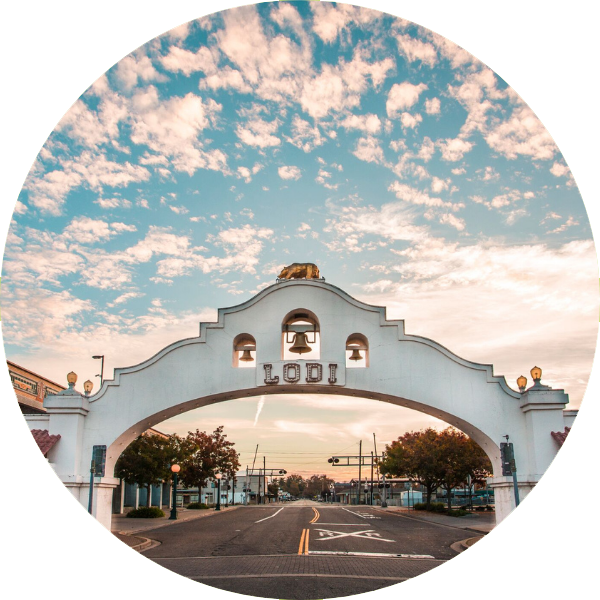
Importantly, the building sits adjacent to the festival grounds near the bowling alley and serves as a gateway into downtown Lodi. A revitalized, active venue at this location strengthens first impressions and reinforces downtown as a place to gather, celebrate, and invest.
The Economic Ripple Effect
This project isn’t just about one building. If this venue were to host just 100 events per year (roughly two per week) with an average attendance of 200 people, that’s 20,000 visitors annually passing through this single location.
If even 25% of those attendees come from outside Lodi, that represents 5,000 additional visitors each year. These are people who will stay in our hotels, dine in our restaurants, visit tasting rooms, shop at local stores, purchase fuel, and support local service providers.
It also creates new opportunities for local caterers, event rental companies, musicians, performers, decorators, and planners. All of this leads to a strengthening of our local event economy from the inside out.
A Model Worth Replicating
This is why this decision matters. We should be evaluating all of our parks and recreation facilities through this same lens: How can they serve our residents better? How can they be activated more fully? How can they generate community value and economic activity?
When thoughtfully structured, public-private partnerships can preserve public access, improve facilities, expand youth programming, and even attract regional sports tournaments and cultural events. All this can happen while easing the long-term financial strain on the City.
Looking Ahead
It is encouraging to see the City bring this proposal forward for public discussion and Council consideration. Thoughtful, transparent conversations like this are exactly how communities move forward.
If successful, this project can become a blueprint showing how Lodi can honor its history, invest wisely, and creatively reimagine its public spaces for the next generation.
