
District 4 Decision Guide: Evaluating Ding’s Track Record and Castle’s Proposals
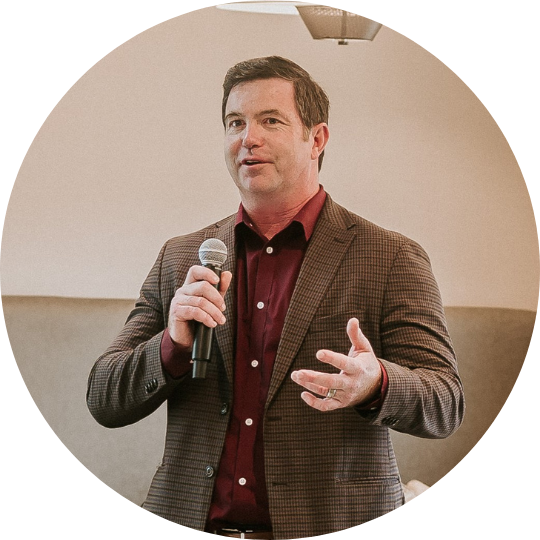
With the District 4 San Joaquin County Board of Supervisors election approaching, voters deserve a clear look past campaign slogans and into each candidate’s measurable record and practical proposals. This analysis compares incumbent Steve Ding’s tenure and outcomes with challenger Travis Castle’s platform on public safety, homelessness and behavioral health, fiscal management, and the county’s economic future.
What Steve Ding’s Tenure Has Meant for Lodi
Politicians often talk about “results over rhetoric,” but the phrase has become so overused that it rarely means much anymore. San Joaquin County Supervisor Steve Ding uses that same language in his campaign messaging, but unlike many public officials, he has a record that can actually be measured against the promise.
Public safety has been one of the clearest examples. Since Supervisor Ding took office in January 2023, the county has added 27 deputies and 33 correctional officers while implementing hiring reforms intended to reduce recruitment delays within the Sheriff’s Office. According to county figures, copper-wire theft has also dropped dramatically, from roughly 500 cases annually to fewer than 100. That decline matters for residents, farmers, contractors, and businesses alike because infrastructure theft creates real economic costs throughout the community.
The county has also continued focusing on property crime prevention. Earlier this year, county officials highlighted efforts targeting catalytic converter theft, including the recovery of thousands of stolen converters in the region. Whether people agree with every policy decision or not, there has been a visible emphasis on law enforcement staffing and public safety operations during Supervisor Ding’s time in office.
Homelessness and behavioral health remain major challenges throughout California, including in Lodi and San Joaquin County. Supervisor Ding has supported a strategy centered on treatment, transitional housing, and behavioral health services rather than simply moving people from one place to another.
The centerpiece of that effort is the $261 million BeWell Behavioral Health Campus, which is projected to serve more than 72,000 individuals annually through integrated mental health and substance abuse services. Programs like SJ CARES have also focused on outreach and housing placement efforts for unsheltered individuals across the county.
Closer to home, the future Lodi Access Center would likely not have moved forward without coordination between the County, the City of Lodi, and Health Care Services leadership. Supervisor Ding was involved in helping facilitate those discussions behind the scenes. Those kinds of partnerships rarely generate headlines, but they often determine whether projects move from concept to reality.
Fiscal management has also been a consistent theme throughout Supervisor Ding’s tenure. Competitive bidding reforms reportedly produced refuse collection savings of up to 45%, while landfill gate fees were reduced by 18%, saving residents and businesses millions of dollars collectively. More than $57 million in road and bridge contracts have also been delivered without raising taxes, including improvements covering over 160 miles of roads and multiple bridge rehabilitation projects throughout the county.
At a time when inflation and affordability continue to pressure working families and employers, cost containment matters. Local government cannot solve every economic problem, but it can avoid making those challenges worse through unnecessary fees, delays, or tax increases.
Agriculture also remains central to the conversation in San Joaquin County. With the local ag economy generating billions annually and supporting thousands of jobs, representation on water and Delta-related issues carries enormous importance. Supervisor Ding has served on both the Advisory Water Commission and the Delta Protection Commission while supporting initiatives tied to Climate-Smart Agriculture and agricultural advocacy efforts in Washington, D.C.
Supervisor Ding has also been a supporter of initiatives aimed at marketing our region to visitors and businesses. The goal is to attract outside dollars through increased visitation to the region and business relocation or expansion. These efforts have been in partnership with the major local business organizations, creating a collaborative economic development ecosystem. The Chamber is incredibly grateful to the Supervisor for his collaboration and support of the work of the Chamber committees, especially our Agribusiness Committee that supports our local ag economy and our Business Development Committee that supports small business growth.
No elected official should be above scrutiny, and voters should continue asking hard questions about long-term infrastructure planning, water policy, and our progress on homelessness. Still, by the standard Supervisor Ding set for himself, measurable results over rhetoric, there is a record of positive results for voters to evaluate, especially for the city of Lodi.
Endorsements for Steve Ding
- Patrick Withrow, San Joaquin County Sheriff
- Ron Freitas, San Joaquin County District Attorney
- San Joaquin County Deputy Sheriffs Association
- San Joaquin County Correctional Officers Association
- San Joaquin County Probation Officers Association
- PORAC
- Stockton Firefighters Local 456
- Lodi Professional Firefighters Local 1225
- Association of Woodbridge Firefighters
- Stockton Police Officers Association
- San Joaquin County Farm Bureau
- California Hispanic Chambers of Commerce Political Action Committee
- San Joaquin County Republican Party
- Central Valley Impact Republicans
From Public Safety to Housing: Examining Travis Castle’s Policy Proposals
Travis Castle is challenging incumbent Steve Ding for the District 4 seat on the San Joaquin County Board of Supervisors, running a campaign centered on public safety, response to homelessness, and government accountability.
Licensed as a paramedic in 2008, Mr Castle worked for Priority One before it became AMR and has spent more than two decades responding to emergencies. That experience heavily informs his campaign, particularly on public safety issues.
Castle says local police and fire agencies need stronger support and argues that many public safety challenges stem from state-level policy failures. One of his more ambitious proposals involves setting aside 25% of homes in large residential developments for firefighters, police officers, healthcare workers, and teachers as a recruitment and retention tool. Workforce housing programs do exist elsewhere in California, but mandates at that scale can create financial challenges for developers if they are not paired with incentives, subsidies, or streamlined approvals. Housing economists have also warned that aggressive set-aside requirements can slow or discourage housing construction in lower-margin markets.
Homelessness is another major focus of his campaign and one where he points to firsthand experience. Through his work as a paramedic, Castle says he regularly encountered individuals facing addiction, mental illness, and housing instability. He later founded Path to Humanity, a nonprofit organization focused on raising funds for organizations providing services to unsheltered residents and families in crisis. The Path to Humanity website dashboard shows they have raised $3,370 to date.
Castle has voiced concerns about San Joaquin County’s BeWell Campus model, arguing that individuals are sometimes treated and released into public spaces without sufficient follow-up care or support networks. He claims the county has seen a 150% increase in homelessness over the past four years and believes current systems lack accountability. His approach would combine treatment services with stricter enforcement measures, including requiring repeat shoplifting offenders to attend rehabilitation programs and increasing public safety presence around businesses impacted by aggressive panhandling and street-level disorder.
County supervisors do not directly control criminal sentencing or diversion programs, which depend on state law, prosecutors, courts, and available treatment capacity, which Mr Castle acknowledges. While recent changes to California law have expanded options for mandatory treatment in some cases, counties across the state continue to face shortages in behavioral health infrastructure and long-term treatment resources.
On agriculture, Mr Castle’s family established Castle Family Ranch in Elk Grove in 1973, and today he and his children operate the ranch in Acampo, raising cattle, goats, and honeybees. He says San Joaquin County lost roughly 10% of its vineyards last year and argues local agriculture is under increasing economic pressure. Castle supports protecting farmland from uncontrolled development while acknowledging that landowners should retain the right to voluntarily transition property uses.
Mr Castle has also campaigned on government accountability, citing concerns about major county construction projects that experienced significant cost overruns. He has proposed creating a contractor rating system to track developer performance and says local government needs leaders willing to enforce accountability when projects fall behind or exceed budgets. Versions of contractor performance tracking systems already exist at the federal level, though implementing one locally would require extensive legal review, standardized evaluation criteria, and protections against claims of political favoritism or unfair procurement practices.
Overall, Castle is presenting himself as a first responder and political outsider focused on restoring trust in county government through stronger public safety policies, local economic protection, and more direct accountability. He has some very lofty and aspirational policy goals that would be a large shift in direction from the current county and state positions.
Endorsements for Travis Castle
- Cement Masons Local 400
- IBEW Local 595
- Sheet Metal Workers Local 104
- Plumbers & Pipefitters Local 442
- San Joaquin County Building & Construction Trades Council
- North Valley Labor Federation
- SEIU Local 1021
- SEIU Local 1015
Disclaimer: The views expressed in this article are solely those of the author in his personal capacity and do not constitute an official endorsement or position of the Lodi District Chamber of Commerce or its Board of Directors. Any formal organizational endorsement by the Chamber would require separate approval through official board action.
